



As a seasoned supplier of AC COB LEDs, I have witnessed firsthand the remarkable evolution and widespread adoption of these advanced lighting solutions in various industries. The demand for AC COB LEDs has been on the rise, driven by their energy efficiency, long lifespan, and high - quality illumination. However, to ensure their optimal performance and longevity, understanding the installation environment requirements is of utmost importance. In this blog, I will delve into the key factors that need to be considered when setting up AC COB LEDs.
Temperature Considerations
Temperature is one of the most critical factors affecting the performance of AC COB LEDs. These LEDs are sensitive to high temperatures, which can cause a decrease in luminous efficacy, color shift, and even shorten their lifespan.
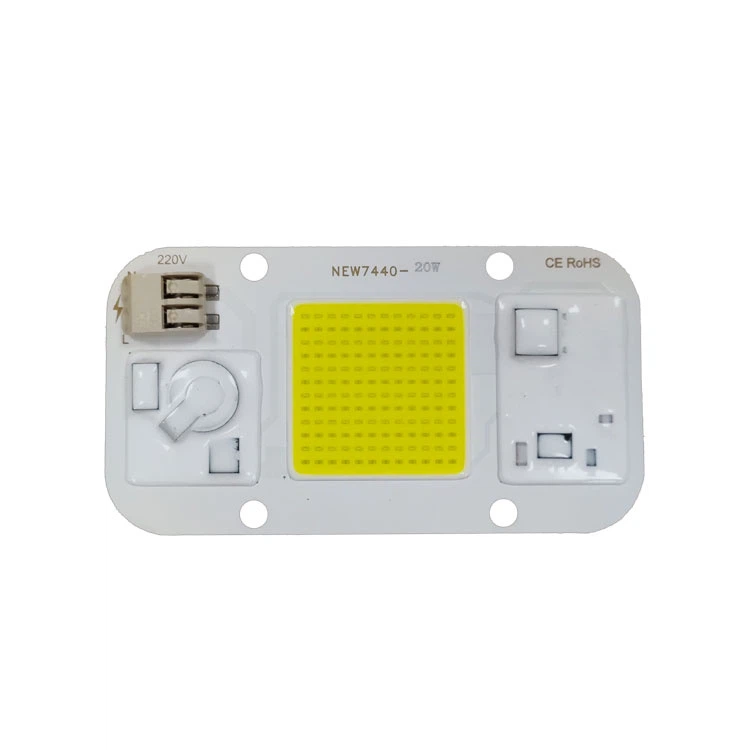

The ideal operating temperature range for AC COB LEDs typically lies between - 20°C and 60°C. When the temperature exceeds this range, the thermal stress on the LED chips can become significant. For instance, if the LEDs are installed in an environment where the temperature often reaches above 60°C, such as in a confined industrial space with high - power machinery generating heat, the internal resistance of the LEDs may increase. This leads to a reduction in the electrical efficiency of the LEDs and a subsequent drop in light output.
On the other hand, extremely low temperatures can also pose challenges. At temperatures below - 20°C, the chemical reactions within the LED chips slow down, which may result in a delay in reaching full brightness and a change in the color characteristics of the light.
To mitigate the impact of temperature, proper heat dissipation mechanisms should be in place during installation. Heat sinks are commonly used to transfer the heat generated by the LEDs to the surrounding environment. For larger - power AC COB LEDs, such as the 220V 50W COB LED, a well - designed heat sink with a large surface area is essential to ensure efficient heat transfer and maintain the operating temperature within the optimal range.
Humidity and Moisture
Humidity and moisture can have a detrimental effect on AC COB LEDs. High humidity levels can lead to corrosion of the electrical contacts and components of the LEDs, which may cause electrical shorts or intermittent failures.
The recommended relative humidity for installing AC COB LEDs is generally between 10% and 90% non - condensing. Condensation is particularly harmful as it can directly damage the LED chips and the associated circuitry. For example, in a bathroom or a greenhouse where the humidity is often high, moisture - resistant enclosures are necessary to protect the LEDs.
If the LEDs are to be installed in an outdoor environment, they should be rated for outdoor use and have proper waterproofing. IP (Ingress Protection) ratings are used to indicate the level of protection against solids and liquids. For outdoor AC COB LED installations, an IP rating of at least IP65 is recommended. This means that the LEDs are protected against dust ingress and low - pressure water jets from any direction.
Dust and Particulate Matter
Dust and particulate matter can accumulate on the surface of AC COB LEDs, reducing their light output and efficacy. In industrial settings or areas with high levels of airborne dust, such as construction sites or woodworking workshops, this issue can be particularly prominent.
When dust settles on the LED lens or emitter, it acts as an absorbent and scattering medium for light. This can lead to a significant decrease in the luminous intensity and uniformity of the light distribution.
To address this problem, regular cleaning of the LEDs is necessary. However, in some cases, it may be more practical to install dust - proof enclosures or filters. For example, if the AC COB LEDs are used in a factory with a lot of metal shavings in the air, a fine - mesh filter can be installed in front of the LEDs to prevent the particulate matter from reaching the light source.
Electrical Environment
The electrical environment in which AC COB LEDs are installed is also crucial. These LEDs are designed to operate on alternating current (AC), and they require a stable power supply.
Voltage fluctuations can have a significant impact on the performance of AC COB LEDs. If the voltage is too high, it can cause overheating of the LEDs and potentially lead to their premature failure. Conversely, a low voltage may result in insufficient light output. Most AC COB LEDs are designed to operate within a certain voltage range, typically around 180V - 260V for a 220V rated LED.
To ensure a stable power supply, the use of voltage regulators and surge protectors is recommended. A voltage regulator can maintain a constant output voltage, even when the input voltage fluctuates. Surge protectors, on the other hand, can protect the LEDs from sudden voltage spikes caused by lightning strikes or power grid disturbances.
When connecting multiple AC COB LEDs, proper wiring and grounding are essential. Incorrect wiring can lead to electrical imbalances, overheating, and even fire hazards. It is important to follow the manufacturer's wiring diagrams and guidelines carefully.
Lighting Application - Specific Requirements
Different lighting applications may have additional installation environment requirements for AC COB LEDs.
In commercial lighting applications, such as supermarkets or office buildings, the color rendering index (CRI) and color temperature of the LEDs need to be carefully selected to create a comfortable and inviting environment. For example, a high CRI (above 90) is often preferred in retail settings to accurately display the colors of products.
In automotive lighting, the LEDs need to withstand vibrations and shocks. Special mounting brackets and shock - absorbing materials should be used to ensure the stability of the LEDs during vehicle operation.
In horticultural lighting, the spectral distribution of the LEDs is crucial for plant growth. AC COB LEDs with specific wavelengths, such as red and blue, are often used to promote photosynthesis. The installation height and spacing of the LEDs also need to be optimized to ensure uniform light distribution over the plant canopy.
Choosing the Right AC COB LEDs for Your Installation
As a supplier, we offer a wide range of AC COB LEDs to meet different installation environment requirements. For general lighting applications, our LED 20W 220V and LED 12W 220V are popular choices. They are energy - efficient and provide a high - quality light output.
For high - power applications, such as industrial lighting or large - scale outdoor lighting, our LED COB 30W 220V and Chip LED 220V 100W offer powerful illumination.
If you are unsure which AC COB LEDs are most suitable for your project, our team of experts is always ready to assist you. We can provide detailed technical advice and help you select the right products based on your specific installation environment and lighting requirements.
Conclusion
Understanding the installation environment requirements for AC COB LEDs is essential for achieving optimal performance, longevity, and safety. Temperature, humidity, dust, electrical conditions, and lighting application - specific factors all need to be carefully considered.
As a reliable supplier of AC COB LEDs, we are committed to providing high - quality products and professional support. Whether you are looking for LEDs for a small residential project or a large - scale commercial installation, we have the right solutions for you.
If you are interested in our AC COB LED products or need more information about installation and application, please feel free to contact us for a business negotiation. We look forward to collaborating with you to bring the best lighting solutions to your projects.
References
- "LED Lighting Handbook", Third Edition, by Patrick Van Erp
- "Solid - State Lighting Technology: Materials, Devices and Applications" by Zhiming M. Wang and Jerry Y.S. Lin
- Manufacturer's technical documentation for AC COB LEDs.