



What is the impact of altitude on drone LED lights?
As a drone LED supplier, I've witnessed firsthand the ever - evolving nature of the drone industry. Drones are used in a variety of applications, from aerial photography and videography to search - and - rescue operations and agricultural surveys. One aspect that often gets overlooked but is crucial for both functionality and safety is the performance of drone LED lights at different altitudes.
1. Basic Principles of Drone LED Lights
Before delving into the impact of altitude, it's essential to understand the basic principles of drone LED lights. LED, or Light - Emitting Diode, technology has revolutionized the lighting industry due to its energy efficiency, long lifespan, and high brightness. In drones, LED lights serve multiple purposes. They can be used for navigation, making the drone visible to the operator, especially during low - light conditions or at night. They also play a role in safety, helping other aircraft and people on the ground to identify the drone's position and movement.
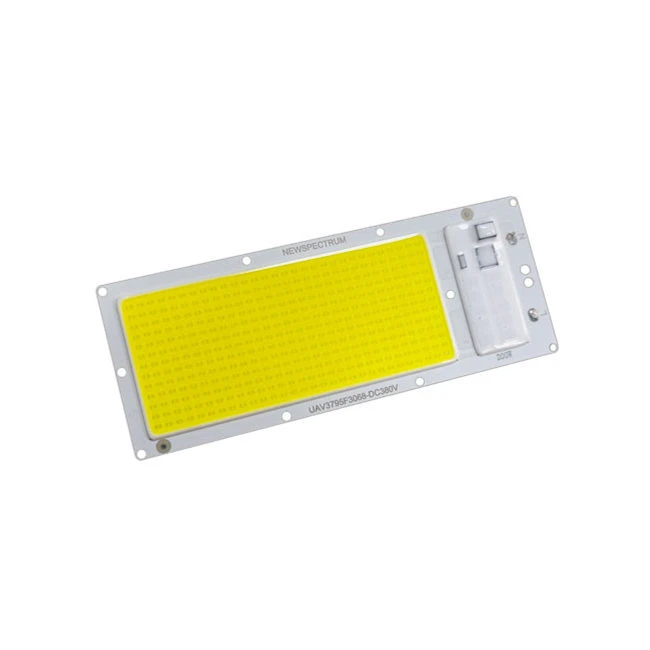
There are different types of drone LED lights available, such as Drone LED Board, Drone COM LED, and Drone DE LED. Each type has its own unique features and is designed for specific applications within the drone system.
2. Impact of Altitude on Light Intensity
One of the most significant impacts of altitude on drone LED lights is on light intensity. As the drone ascends to higher altitudes, the air density decreases. The atmosphere acts as a medium that can scatter and absorb light. At lower altitudes, there are more air molecules, dust particles, and water vapor, which can scatter the light emitted by the LED lights. This scattering reduces the effective light intensity that reaches the observer's eyes or any sensor on the ground.
As the altitude increases, there are fewer air molecules to scatter the light. In theory, this should result in a more direct path for the light, and the light should be more visible from a greater distance. However, this is also affected by other factors such as the inverse - square law. The intensity of light follows the inverse - square law, which states that the intensity of light is inversely proportional to the square of the distance from the source. So, as the drone gets higher (increasing the distance between the LED light and the observer), the light intensity at the observer's location decreases significantly.
For example, if a drone is flying at a low altitude of 10 meters and then ascends to 100 meters, the light intensity at a fixed point on the ground will decrease by a factor of 100 (since (I_1/I_2=(d_2/d_1)^2), where (I_1) and (I_2) are the initial and final intensities, and (d_1) and (d_2) are the initial and final distances). This decrease in intensity can make it difficult for the operator to visually track the drone or for other aircraft to detect it, which poses a safety risk.
3. Impact on Color Rendering
Altitude can also have an impact on the color rendering of drone LED lights. The Earth's atmosphere can affect the color of light due to a phenomenon called Rayleigh scattering. Rayleigh scattering is more effective for shorter wavelengths of light (blue and violet) compared to longer wavelengths (red and orange).
At lower altitudes, the blue and violet components of the LED light are more likely to be scattered. This can make the light appear more yellow - orange or red. As the drone ascends to higher altitudes, there is less scattering of the shorter wavelengths. So, the color of the LED light may appear closer to its original color. However, this can also be affected by the type of LED light. Some LED lights are designed to have a specific color temperature, and any change in the color due to altitude can deviate from the intended color, which may be a problem in applications where accurate color representation is important, such as in aerial photography or when using the LED lights for signaling purposes.
4. Impact on Power Consumption and Heat Dissipation
Higher altitudes also bring changes in temperature and air pressure, which can affect the power consumption and heat dissipation of drone LED lights. At higher altitudes, the temperature is generally lower. LED lights generate heat during operation, and proper heat dissipation is crucial for their performance and lifespan.
The lower temperature at higher altitudes can, in theory, help with heat dissipation. However, the decrease in air pressure also means that there are fewer air molecules to carry away the heat. This can lead to a build - up of heat within the LED light module, which can cause the LED chips to overheat. Overheating can reduce the efficiency of the LED lights, decrease their brightness, and even shorten their lifespan.
In terms of power consumption, the change in temperature can affect the electrical properties of the LED components. The resistance of the semiconductor materials in the LED chips can change with temperature. A decrease in temperature can increase the resistance, which may require more power to maintain the same level of brightness. This can be a concern for drones, as they have limited power sources, and any increase in power consumption can reduce the flight time.
5. Impact on Visibility and Safety
The combined effects of altitude on light intensity, color rendering, power consumption, and heat dissipation all have a significant impact on the visibility and safety of drones. Poor visibility of the drone LED lights can make it difficult for the operator to control the drone, especially in low - light conditions or at night. It can also pose a risk to other aircraft in the vicinity, as they may not be able to detect the drone in time to avoid a collision.
For example, in search - and - rescue operations, drones are often used to search large areas at night. The LED lights on the drones are crucial for guiding the rescuers to the location of the target. If the lights are not visible due to the impact of altitude, it can delay the rescue process and put the lives of the victims at risk.
6. Mitigating the Impact of Altitude
To mitigate the impact of altitude on drone LED lights, several strategies can be employed. One approach is to use more powerful LED lights. By increasing the initial brightness of the LED lights, the decrease in intensity due to the inverse - square law and atmospheric scattering can be compensated to some extent.
Another strategy is to use LED lights with better heat dissipation designs. This can include using heat sinks or fans within the LED light module to ensure that the heat is effectively dissipated even at higher altitudes. Additionally, the use of advanced control systems can adjust the power output of the LED lights based on the altitude and environmental conditions. For example, the system can increase the power when the drone ascends to maintain a constant level of brightness.
7. Conclusion and Call to Action
In conclusion, altitude has a profound impact on drone LED lights, affecting light intensity, color rendering, power consumption, heat dissipation, and overall visibility and safety. As a drone LED supplier, we understand the importance of providing high - quality LED lights that can perform well at different altitudes.
Our Drone LED Board, Drone COM LED, and Drone DE LED are designed with these factors in mind. We continuously research and develop new technologies to improve the performance of our LED lights at various altitudes.
If you are in the drone industry and are looking for reliable and high - performance LED lights for your drones, we invite you to contact us for procurement and to discuss your specific requirements. We are committed to providing you with the best solutions to ensure the safety and functionality of your drones.

References
- Hecht, E. (2002). Optics. Addison - Wesley.
- Smith, J. M. (2015). Fundamentals of Semiconductor Devices. Wiley.
- International Civil Aviation Organization (ICAO). (2018). Drone Regulations and Safety Guidelines.