



As a supplier of AC COB LEDs, I often get asked about the Color Rendering Index (CRI) of our products. The CRI is a crucial factor when it comes to lighting, as it determines how accurately a light source can reproduce the colors of objects compared to natural light. In this blog post, I'll delve into what the CRI of an AC COB LED is, why it matters, and how it relates to our AC COB LED offerings.
Understanding the Color Rendering Index (CRI)
The CRI is a scale that ranges from 0 to 100, with 100 representing the most accurate color reproduction, similar to natural sunlight. A light source with a high CRI will make colors appear more vibrant, true to life, and easier to distinguish. On the other hand, a low CRI can make colors look dull, washed out, or even distorted.
To measure the CRI, a set of eight standard color samples (R1 - R8) are used. These samples represent a range of common colors, including red, green, blue, and skin tones. The light source is then compared to a reference light source (usually a blackbody radiator for incandescent-like sources or a daylight simulator for white light sources) to determine how well it reproduces these colors. The average of the scores for these eight samples is the general CRI, denoted as Ra.
In addition to the general CRI, there are also special CRI values for specific colors. For example, R9 is a measure of how well a light source reproduces deep reds, which is important for applications such as photography, retail lighting, and horticulture.
Why CRI Matters in AC COB LEDs
AC COB (Chip-on-Board) LEDs are becoming increasingly popular in a wide range of lighting applications due to their high efficiency, compact size, and excellent thermal performance. However, the quality of the light they produce can vary significantly depending on the CRI.
In residential lighting, a high CRI is essential for creating a warm and inviting atmosphere. It allows you to see the true colors of your furniture, paintings, and decor, making your home look more beautiful and comfortable. For example, in a living room, a high CRI light will make the colors of your sofa, curtains, and wall art appear more vivid and appealing.
In commercial lighting, a high CRI is crucial for enhancing the visual appeal of products and improving the shopping experience. In a retail store, a high CRI light can make clothing, cosmetics, and food look more attractive, increasing the likelihood of a purchase. In a museum or art gallery, a high CRI light is necessary to accurately display the colors of paintings, sculptures, and artifacts.
In industrial and outdoor lighting, a high CRI can improve visibility and safety. For example, in a factory or warehouse, a high CRI light can make it easier for workers to distinguish between different parts and materials, reducing the risk of errors and accidents. In outdoor lighting, a high CRI can enhance the visibility of signs, roads, and buildings, making the environment safer for pedestrians and drivers.
CRI of Our AC COB LEDs
At our company, we understand the importance of CRI in lighting applications. That's why we offer a wide range of AC COB LEDs with high CRI values. Our standard AC COB LEDs typically have a CRI of 80 or higher, which is suitable for most general lighting applications. However, we also offer high-CRI options with a CRI of 90 or higher for applications where accurate color reproduction is critical.
For example, our 220V 30W LED has a CRI of 90, making it ideal for residential and commercial lighting applications where high-quality color rendering is required. This LED provides a bright and uniform light output, with a color temperature of 3000K - 6500K, allowing you to choose the right color for your needs.

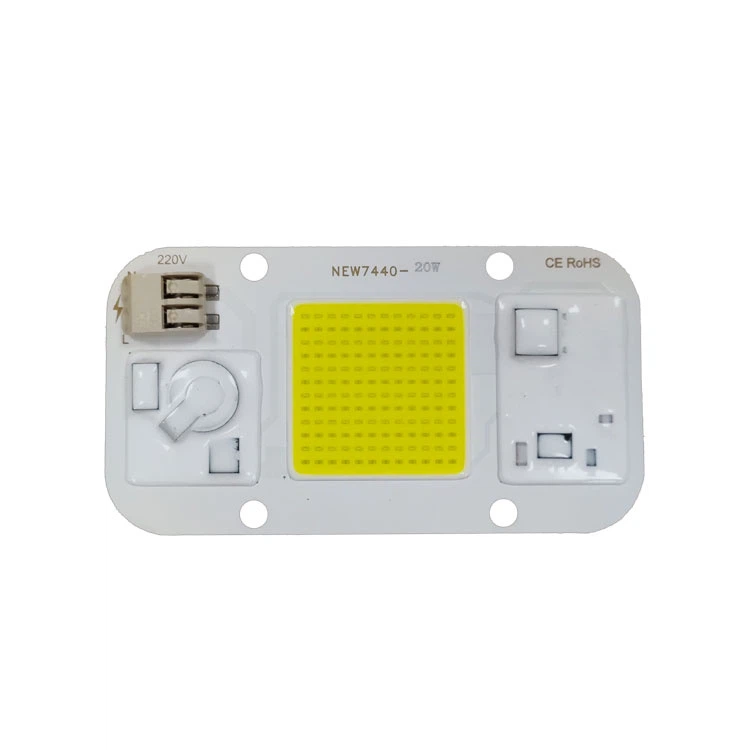
Our LED 20W 220V also has a high CRI of 90, making it a great choice for energy-efficient lighting in offices, schools, and other commercial buildings. This LED is designed to provide a long lifespan and low maintenance, reducing your overall lighting costs.
In addition, our COB LED 15W has a CRI of 85, which is suitable for a variety of lighting applications, including task lighting, accent lighting, and decorative lighting. This LED is compact and easy to install, making it a popular choice for DIY lighting projects.
Factors Affecting the CRI of AC COB LEDs
The CRI of an AC COB LED can be affected by several factors, including the type of phosphor used, the quality of the LED chips, and the manufacturing process.
The phosphor is a key component in an LED that converts the blue light emitted by the LED chip into white light. Different types of phosphors have different spectral characteristics, which can affect the CRI. For example, a phosphor with a broad spectrum will generally have a higher CRI than a phosphor with a narrow spectrum.
The quality of the LED chips also plays a significant role in the CRI. High-quality LED chips with uniform color and high efficiency are more likely to produce a high CRI light. In addition, the manufacturing process can also affect the CRI. For example, proper mixing and coating of the phosphor can ensure a more uniform distribution of light and a higher CRI.
Conclusion
In conclusion, the Color Rendering Index (CRI) is an important factor to consider when choosing an AC COB LED. A high CRI can enhance the visual appeal of your lighting, improve the quality of your products, and increase safety and visibility. At our company, we offer a wide range of AC COB LEDs with high CRI values to meet the needs of different lighting applications.
If you're interested in learning more about our AC COB LEDs or have any questions about CRI, please don't hesitate to contact us. We're always happy to help you find the right lighting solution for your needs. Whether you're a homeowner, a business owner, or a lighting designer, we can provide you with the high-quality AC COB LEDs you need to create a beautiful and functional lighting environment.
References
- Ohno, Yoshi. "Color quality scale (CQS) and color rendering index (CRI)." Lighting Research Center, Rensselaer Polytechnic Institute, 2010.
- Rea, Mark S., et al. "A new color quality scale." Lighting Research Center, Rensselaer Polytechnic Institute, 2008.